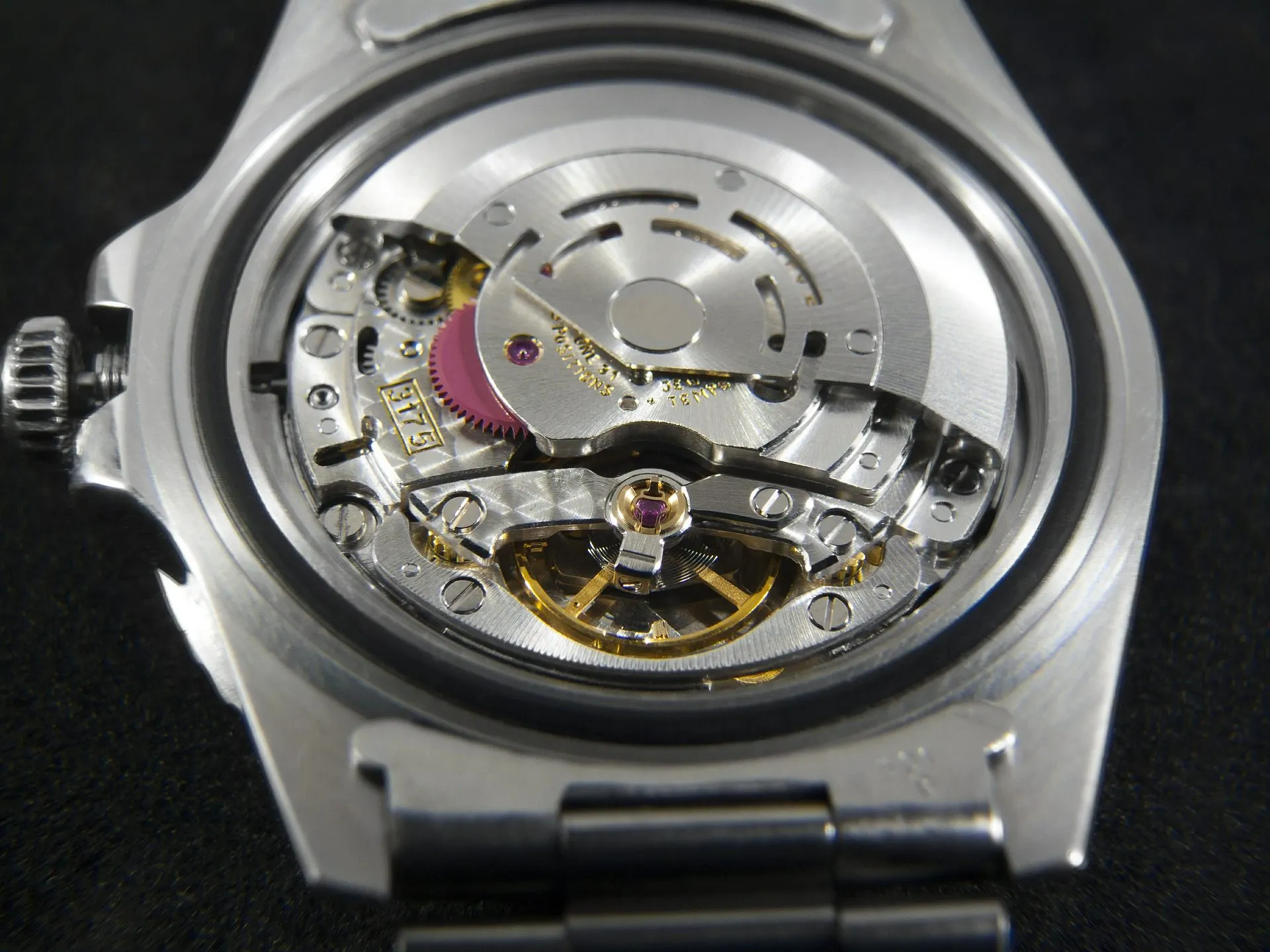
An automatic only runs while its mainspring has some wind in it. Leave it on the bedside table for longer than its power reserve and it stops. That is not a fault; it is how it works. What matters is knowing how long yours lasts and how to start it properly.
It stops overnight or over the weekend
This is the most common cause. A fully wound watch with a 40-hour reserve lasts a night and most of a day off the wrist. One with 80 hours gets through the weekend. Check your model’s reserve on its page or in the power reserve guide.
It stops even while you wear it
The rotor needs movement. If you spend the day sitting at a computer, your wrist moves little and the watch may never wind fully. You notice it most in the first days, when the watch arrives unwound.
- If it has hand winding, give the crown 20 to 40 turns towards 12 o’clock when you put it on, without pulling it out.
- If it has no hand winding, rock it gently from side to side for a minute to start it. The day will do the rest.
- If the crown screws down, unscrew it first and screw it back in when you finish.
When it might be a fault
If the watch stops a few hours after a full wind, suddenly gains several minutes a day or the rotor makes a loud metallic noise, take it to a watchmaker. A common and easy fix is magnetism: leaving the watch on a speaker, a magnetic bag clasp or next to a laptop can magnetise the hairspring. A demagnetiser fixes it in minutes.
Do you need a watch winder?
A watch winder turns the watch inside a box so it never stops. It is handy if you own several automatics, but not necessary: letting a watch stop does not harm it. If setting it every Monday annoys you, look at the models with 70 hours of reserve or more.