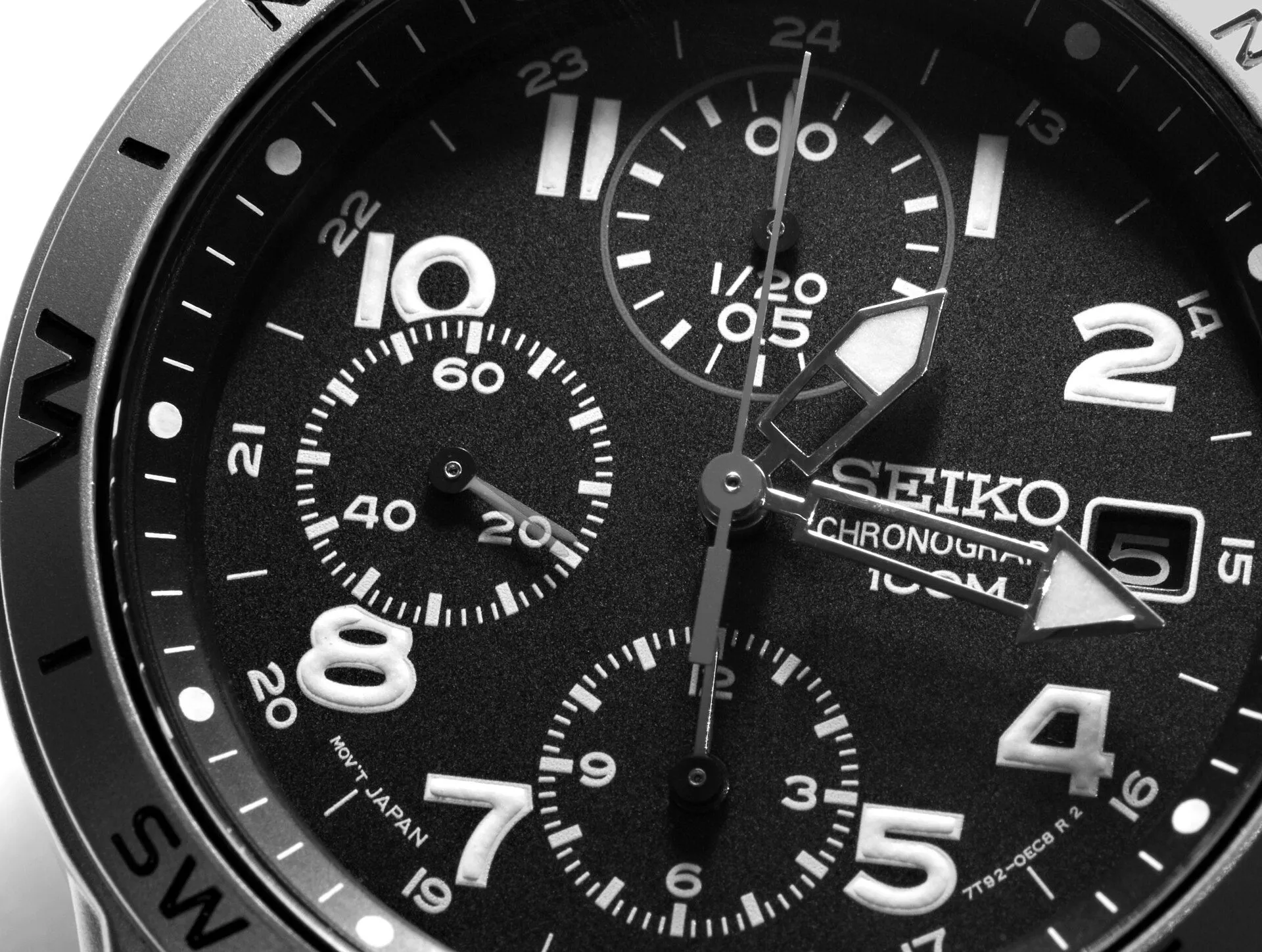
The crystal is the transparent cover that protects the dial. The automatic watches in this catalogue use four types, which differ mainly in two ways: how easily they scratch and how they react to a knock.
Sapphire
It is synthetic sapphire, the same material as the jewels in the movement. It reaches 9 out of 10 on the Mohs hardness scale: only diamond scratches it, so brushing against keys, tables or a belt buckle leaves no mark. On the other hand it is more rigid, and a sharp blow on the edge can chip it. Many have an anti-reflective coating that improves legibility in the sun.
Hardlex
Seiko’s name for its hardened mineral glass. It is harder than ordinary mineral glass and more flexible than sapphire: it scratches with use but handles knocks better. It is what Seikos under €700 use, from the 5 Sports to the Prospex Turtle.
Mineral
Toughened glass. It is the cheapest to make and replace, and the first to scratch. Many entry-level watches use it, such as the Orient Bambino or the Citizen Promaster Diver.
Acrylic
Clear plastic, the crystal of older watches and of some current ones such as the Vostok Amphibia or the Swatch Sistem51. It scratches easily, but it does not shatter, and light scratches can be polished out at home with a little paste. It is light and allows very domed shapes.
In the catalogue
| Crystal | Watches | Least expensive |
|---|
To see only the watches that have it, there is a list of watches with sapphire crystal and another of sapphire automatics under €600.
Which to choose
- For every day, the office or dress: sapphire. It ages best.
- For sport or manual work: Hardlex or sapphire; Hardlex suffers less from a knock and is cheap to replace.
- For a first inexpensive automatic: mineral, without worry. If it scratches one day, it can be replaced.